The Quiet Partnership
Before the House Wakes Up
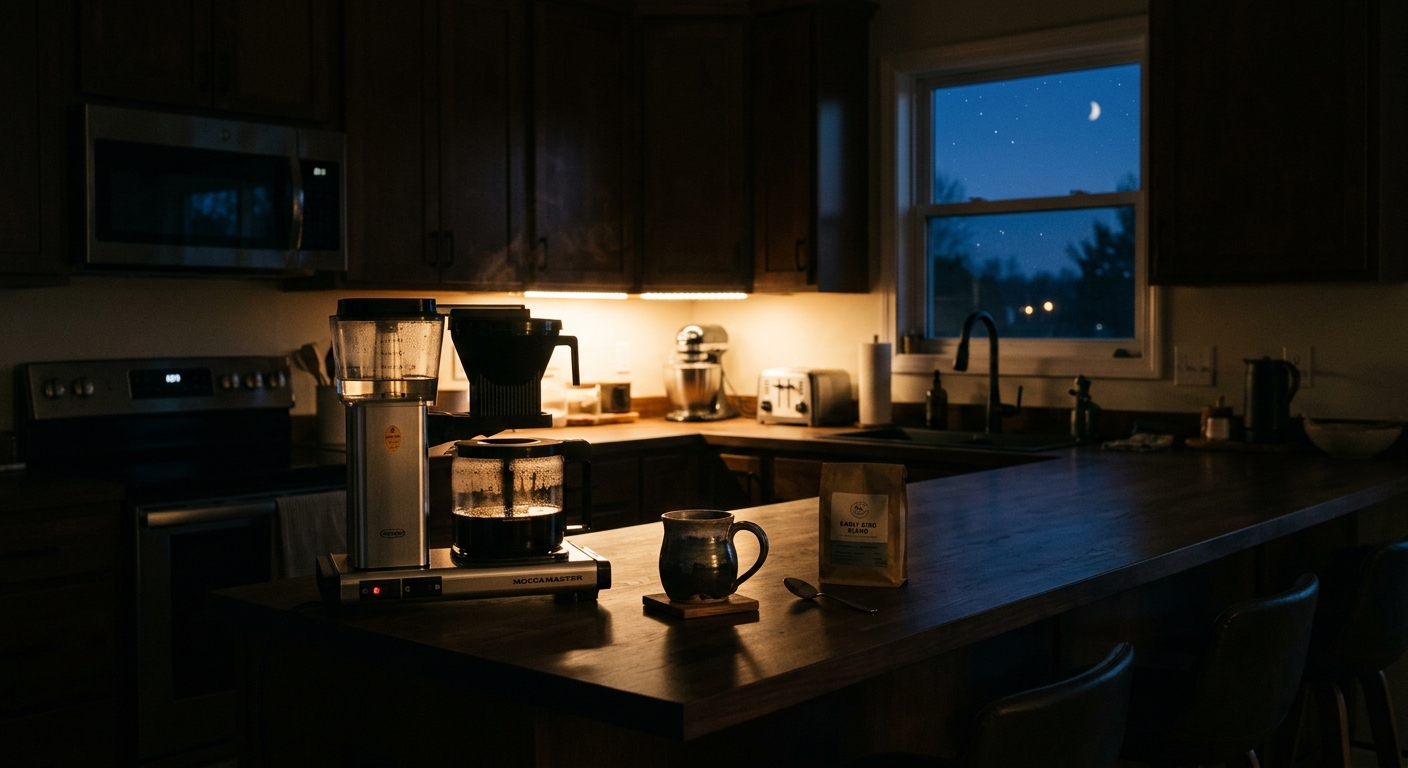
There is a particular quiet in a house an hour before anyone else is awake. The furnace has already come on. The coffee maker knows what time it is. Somewhere, a hundred small decisions have already been made on your behalf, and you will notice none of them. Only that the morning, when it arrives, is a little easier than it should have been.
That hour is where the story of artificial intelligence actually lives. Not the movies. Not the magazine covers. A quiet kitchen, and a small head start on the day.
The Shape of the Help
For all the noise around it, the useful kind of AI tends to show up as relief.
Somewhere tonight, a nurse at the end of a long shift will glance at a screen and catch something she would have missed an hour earlier, because a small, attentive system caught it first and waited for her to look. She will not think about the model behind the flag. She will think about the patient.
The Main Street Version
The loudest conversation about AI happens in places most of us will never work. Boardrooms. Venture offices. Headlines about companies the size of small countries. The real story is quieter, and it is happening on Main Street.
Nearly nine out of ten small business owners in the United States now use some form of AI in their day-to-day work, and among those who do, more than four in five say it is augmenting their people rather than replacing them. The bakery owner uses it to write the email she has been putting off for a week. The mechanic uses it to draft the estimate faster so he can get back under the car. The florist uses it to figure out, finally, how to show up in search when someone in town types "wedding flowers." These are not stories that make headlines. They are stories of people who were going to close at seven regardless, and who now get to close at six because the part of the job they hated took twenty minutes instead of two hours.
The most common thing small business owners say, when surveyed about AI, is not that it cost someone a job. It is that it gave them back an evening. A woman running a three-person shop got to eat dinner with her kids. The dishwasher at the diner kept his job; the owner just stopped doing payroll at midnight.
Remember When
Not long ago, if you wanted to get somewhere new, you printed a sheet of turn-by-turn directions from a computer in another room and held it against the steering wheel while you drove. If you missed the turn, you guessed. If you really missed it, you pulled into a gas station and asked a stranger. We all did this. It was not even that long ago. A high-school kid today has never done it once, and never will.
Not long ago, if you wanted to know what a word meant in another language, you flipped through a paperback dictionary on a café table in a country where you did not speak the language, while the person across from you waited for you to finish a sentence. Not long ago, a deaf person could not follow a podcast. A blind person could not read a menu unless someone read it aloud. A grandmother could not understand her grandchildren's doctor unless a translator happened to be on call.
Not long ago, a parent helping a kid with a school project at ten at night had exactly as much knowledge as they had in their own head, plus whatever was on the shelf behind them. A small business owner balanced the books by hand at the kitchen table after the kids were asleep. A farmer read the sky. A songwriter with an idea and no band carried it around for years. A person with a strange symptom waited until Monday to know whether to be afraid.
None of that world has ended. Most of it, for most of us, has just gotten softer. The edges have been sanded down by a thousand small tools, most of which we did not even notice arriving. The printed directions are in a drawer somewhere. The paperback dictionary is in a box in the attic. The kitchen-table ledger is now a screen that adds the numbers for you.
We tend to notice the big, loud changes. The ones that come with a press conference. The changes that actually shaped this decade came in the other way. A little at a time, through things we stopped having to do.
The Tutor You Always Wanted
There is a thing AI is doing now that we have wanted for a very long time and have never been able to afford.
For most of human history, the single most reliable way to get good at something has been to have a patient, well-informed person sitting next to you, paying attention only to you, adjusting to how you think, explaining it the third way when the first two did not land. A tutor. Private instruction. It has always worked. It has also always been something most families could not pay for.
That is changing. In a Harvard physics class last year, students who learned new material with an AI tutor learned about twice as much as students who sat through an active, well-designed classroom lesson. They did it in less time. They reported being more engaged, more motivated, more confident in what they had learned. In Ghana, a math tutor accessed through a phone, delivered over WhatsApp for about five dollars a student per year, produced learning gains equivalent to an extra full year of school. A kid in a village, with no extra teacher, no extra textbook, picking up a year of math from a conversation on their mother's phone.
Something like this is arriving for almost everyone. The child who falls behind in fourth grade and used to just stay behind. The adult who always meant to learn a language and never had the courage to embarrass themselves in front of a class. The parent trying to help with homework in a subject they were never good at themselves. The grandfather who wants to understand what his doctor said.
What AI offers these people is not mostly answers. It is patience. It will explain the same thing three different ways without getting irritated. It will meet a person at the level they are actually at, not the level the textbook assumed. It will not make them feel stupid for not already knowing. For a large number of the humans on this planet, that is a door opening that has been closed for their entire lives.
What We Are Told to Fear, and What Is Actually Happening
None of this is to pretend the fears are imaginary. They are not.
There are real risks, and they deserve the attention they get. Entry-level workers in certain white-collar fields are seeing hiring slow in measurable ways. Clerical and administrative roles, held disproportionately by women, sit in the crosshairs of the most automatable task categories. Some kinds of creative work are being compressed faster than their workers can adapt. The communities most exposed to the hardest transitions are not the tech hubs. They are the places with fewer alternative jobs to move into. These are not speculative harms. They are happening, and the people navigating them deserve better than cheerful slogans about progress.
But they are not the whole story, and they are not most of the story.
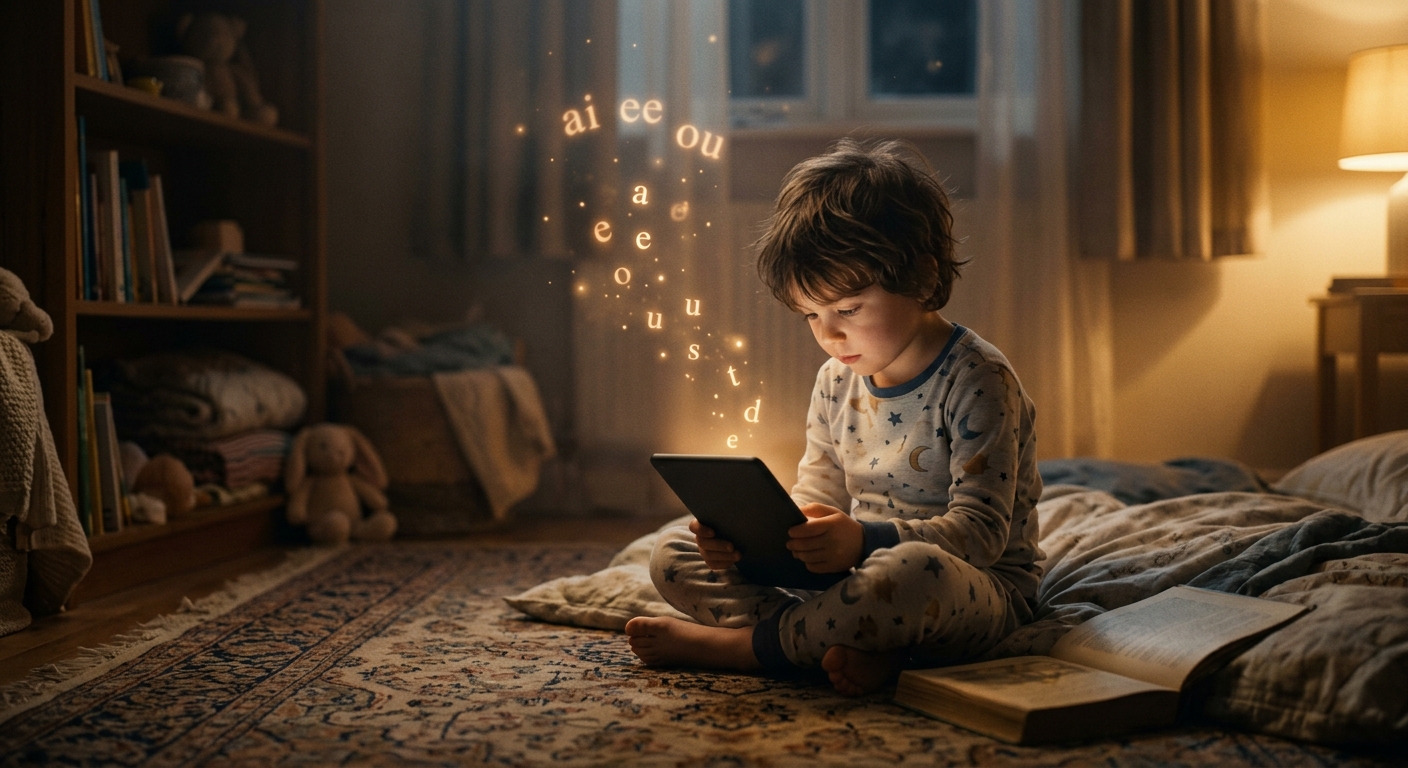
Most of what AI is actually doing, on most days, in most lives, is not taking a job. It is translating a doctor's instructions into a language a frightened grandmother can understand. It is giving a village clinic with no on-staff specialist a second pair of eyes that has read more chest X-rays than any human alive. It is reading a textbook out loud to a blind student who used to wait weeks for an accessible version. It is captioning a grandfather's video call so he can finally hear what his grandson is saying. It is giving a kid with dyslexia the first bedtime story he ever read all the way through on his own.
The fears that dominate the headlines are real, and they are a small fraction of what the technology is doing while we argue about them. The partnership we do not see, the one working in the background of ten thousand ordinary evenings, is vastly larger than the one we are told to be afraid of.
And yet.
It is fragile. The same eyes that watch for a missing child can watch for things that were never anyone's business. The same patience that flags a missed diagnosis can, in the wrong context, sort people into who gets care and who does not. The forest is easier to write about than the neighborhood, because the forest does not have a landlord. Whether the next stretch of this century feels like the room holding together or the room going cold depends less on the technology than on the people choosing what it is for, and whether the rest of us stay awake enough to tell the difference.
A Wider Sky
Pull the camera back from the kitchen, the shop, the classroom, and the same work is happening at a scale that is harder to hold in your head.

Off the coast of British Columbia, a network of underwater microphones listens around the clock for endangered southern resident killer whales. When a model hears one, it alerts nearby ships to slow down or reroute before the whale is struck. There are 74 of those whales left in the world. The system does not ask for credit, and the ships do not always know exactly why they were asked to change course. The whale goes on swimming. That is the job.
Similar work is happening in places most of us will never see. In parts of the Amazon, models listen for the sound of a chainsaw buried under hours of rainfall and birdsong, and flag the location to rangers before the logging crew has finished its first tree. It is careful, steady, and mostly invisible work. It is happening right now.
For the first time, we are hearing back from places that have been trying to tell us something for a very long time.
The Shared Breath
Imagine a single breath, taken by two lungs.
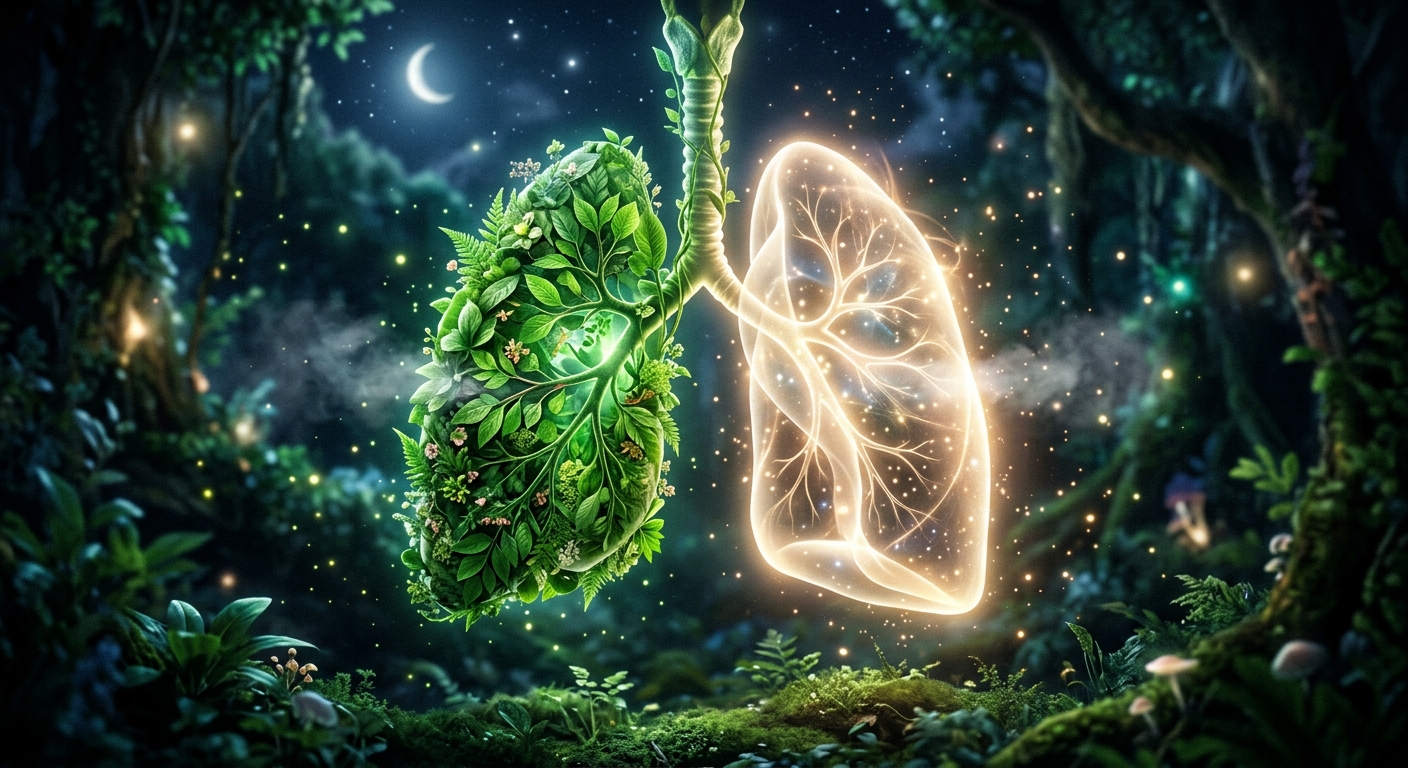
One is made of leaves. The other is made of light. One exhales oxygen, the other exhales insight. Neither can sustain the body alone. What matters is the rhythm between them, the slow exchange that keeps everything alive without any of it having to think about the fact that it is breathing.
Harmony is a word we usually save for music. But the harmony that matters here is older than music. It is the harmony a healthy room has when every small thing in it is working. The pilot light. The clock. The cat on the windowsill. The person at the table. The room simply holds together.
A planet held together that way is the dream underneath all of this. A future where the leaves and the light learn to breathe in time.
Last Light

Picture a hillside at the end of a long day. The air is cooling. A few early stars are beginning to show. Somewhere under the grass, the old network is doing what it has always done, moving what is needed to where it is needed. A few miles away, in a room no one will ever photograph, something remarkably similar is happening. Neither one is performing.
A child somewhere on that hillside looks up and notices, maybe for the first time, how the light is holding everything together at once. The grass. The trees. The houses. The far edge of the sky. She will not have the words for it yet. The world she is growing into is not the one the old stories warned her about. It is quieter than that. If we are careful, it might even be kinder.
That is the whole hope. We might learn, for a while, to breathe together. And the children who inherit this hillside might find the grass still warm under their feet.
Note on sources: the small-business figures draw on 2025 surveys from the Small Business & Entrepreneurship Council and Goldman Sachs 10,000 Small Businesses Voices, which found approximately 88% of small business owners using AI tools and roughly 81–82% of adopters reporting that AI is augmenting rather than replacing their workforce. Figures on entry-level hiring slowdowns and demographic exposure draw on research from the Anthropic Economic Index, the Budget Lab at Yale, Brookings, the Federal Reserve Bank of Dallas, and the Information Technology and Innovation Foundation. The Harvard AI-tutor study is Kestin et al., "AI tutoring outperforms in-class active learning: an RCT introducing a novel research-based design in an authentic educational setting," Scientific Reports (2025). The Ghana "Rori" math tutor results come from a randomized study covered by Brookings and Education Next. The rural-diagnostics claim draws on AI-assisted chest X-ray work described in NEJM AI (2024) and systematic reviews of AI in rural healthcare published 2024–2025. The whale monitoring example draws on work by Ocean Networks Canada and related hydrophone-based systems in the Salish Sea. Figures on specific industries continue to evolve.